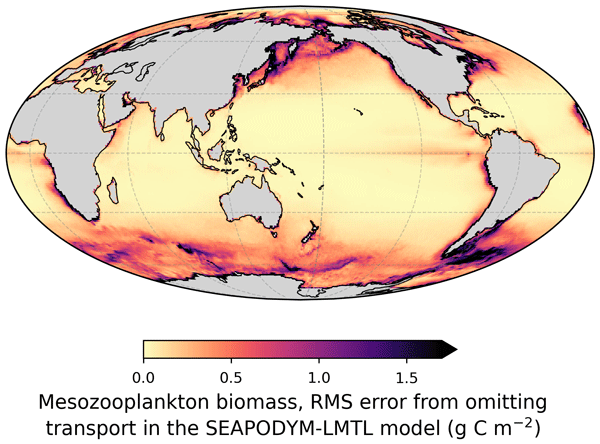
New Paper on implementation of the SEAPODYM low and mid trophic levels in Python with a flexible optimization framework
We are pleased to share a recently published paper co-authored by Sarah Albernhe (Mercator Ocean International). The paper "SeapoPym v0.1: implementation of the SEAPODYM low and mid trophic levels in Python with a flexible optimization framework" contributes to Work Package 3 and Pelagic Living Lab 1.
Marine zooplankton transfer energy from microscopic algae to fish and larger predators. Understanding their distribution helps predict how oceans respond to climate change. We developed SeapoPym, a freely available model that simulates zooplankton using ocean temperature and plant productivity. This tool lets scientists test biological hypotheses and estimate parameters from observations.


