The Tuscan Archipelago Living Lab field activities
The Tuscan Archipelago National Park is one of the largest marine parks in Europe and it has been declared a Biosphere Reserve by UNESCO in recognition of its unique environments and the large diversity of marine and terrestrial life. The Tuscan Archipelago National Park National Park spans 614.7 km2 of sea between the Ligurian and the Tyrrhenian Seas and currently represents 20% of the marine protected areas in Italy. The Tuscan Archipelago includes seven islands with different levels of management, with restrictions ranging from fully protected islands with limited human access and no extractive activities to fully open islands. This Living Lab provides a unique natural laboratory to test and validate innovative observing platforms and EOV indicators, especially regarding seagrass and habitat-forming macroalgae, along gradients of anthropogenic pressure.
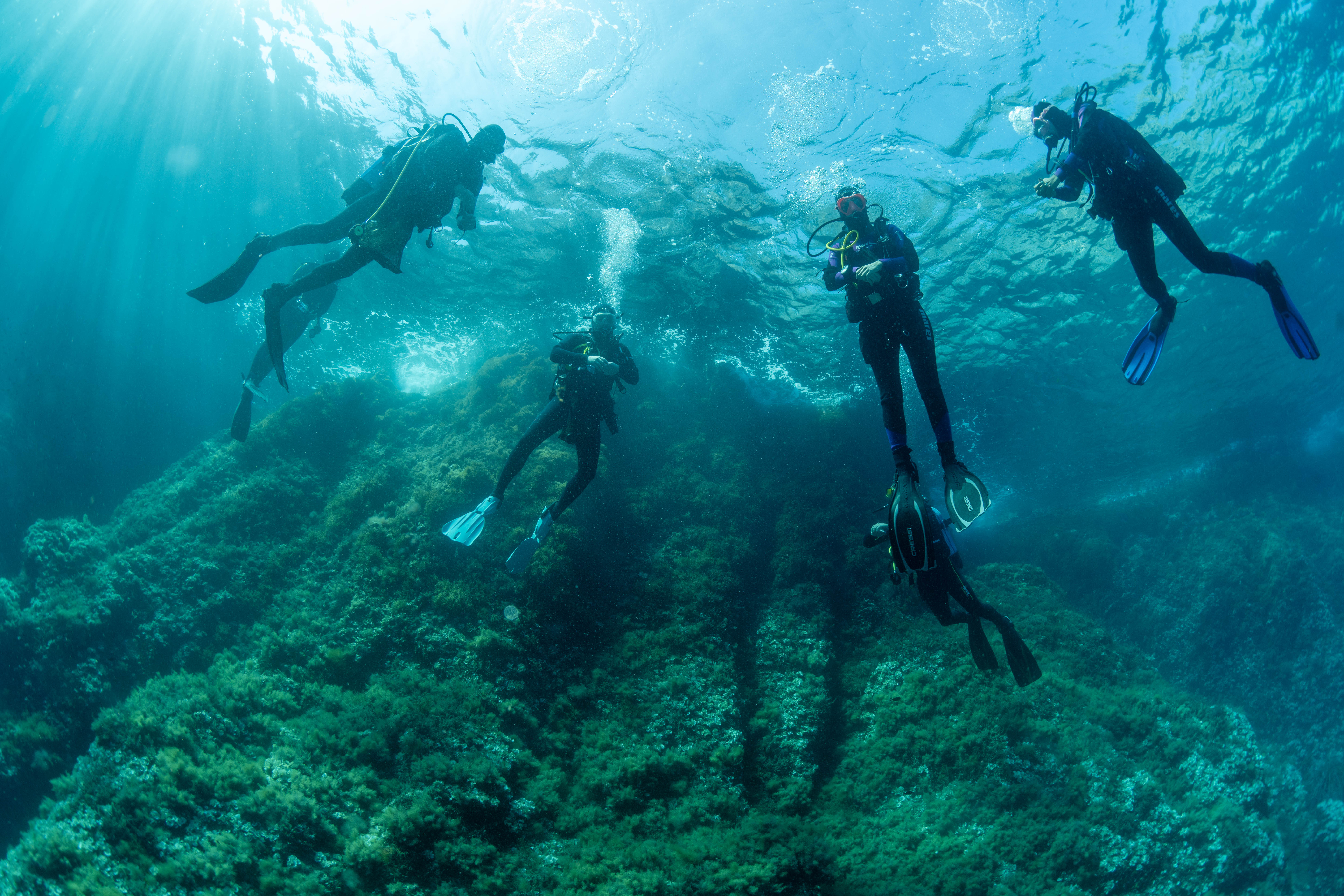
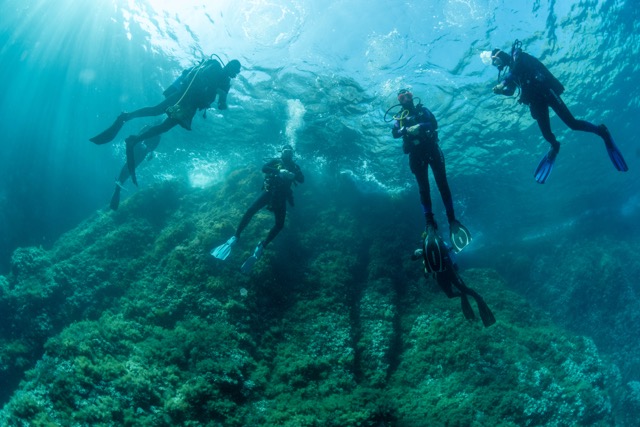
Researchers of the UNIPI team during underwater activities. Photo by Lisandro Benedetti-Cecchi.
The Tuscan Archipelago hosts extensive macroalgal forests (genera Cystoseira sensu lato and Sargassum spp.) and seagrass meadows (Posidonia oceanica). These habitats support diverse invertebrate and fish assemblages, deliver carbon uptake and sequestration, and underpin a thriving economy based on tourism (e.g, diving, bathing, bird-watching, boating, sailing, angling) and artisanal fisheries.
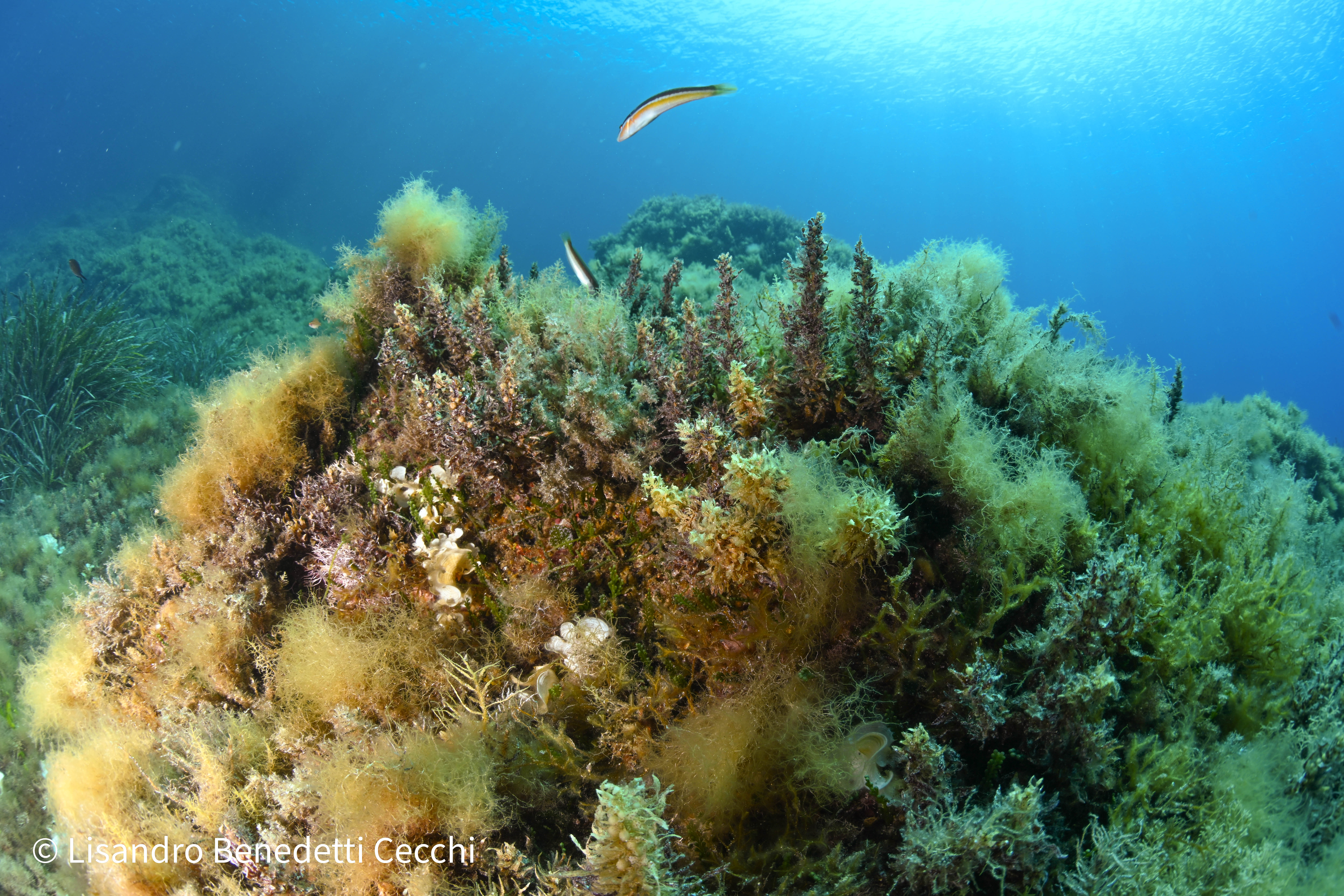
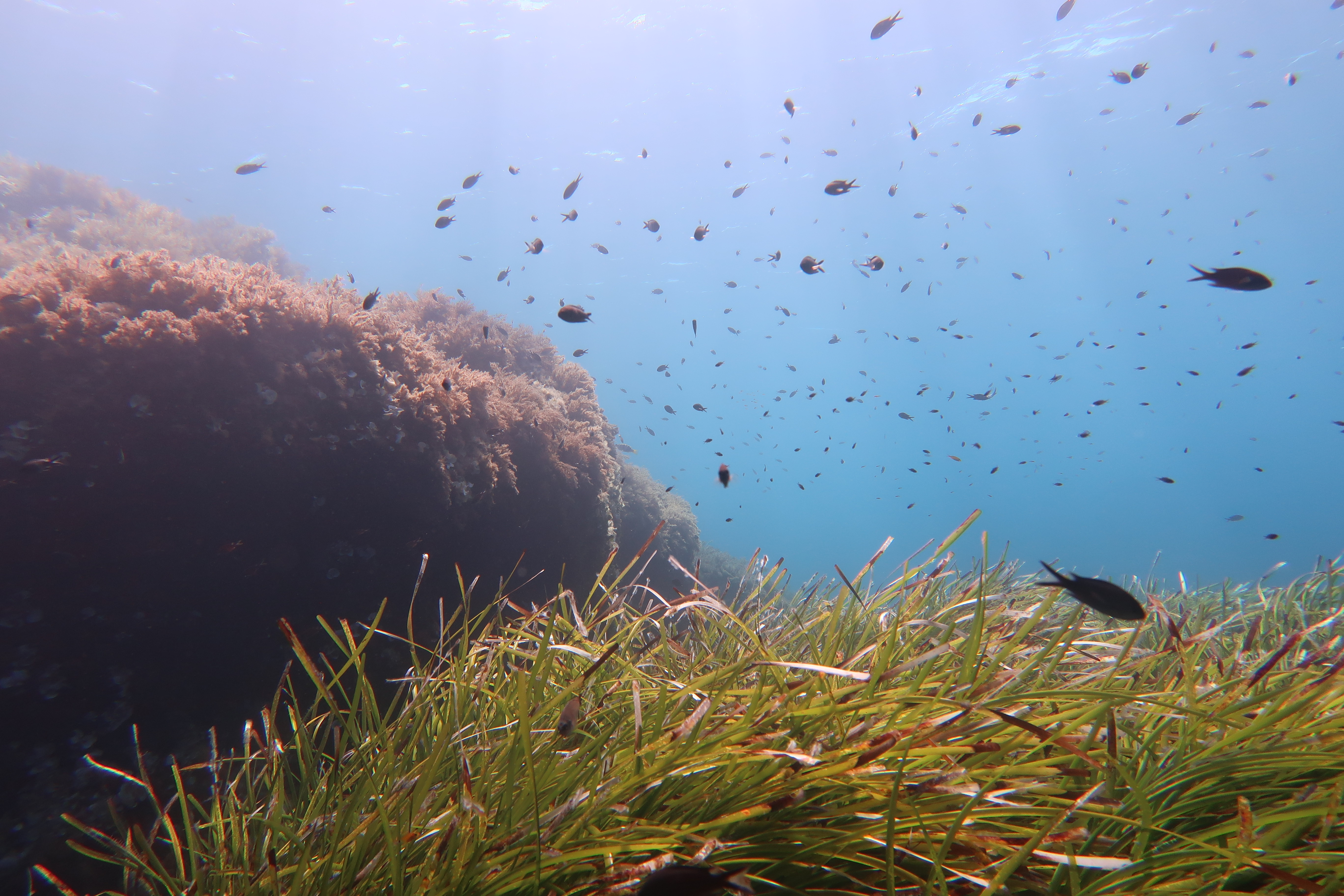
Photos of shallow subtidal habitats typical of the Tuscan Archipelago: rocky reefs dominated by canopy-forming macroalgae (Cystoseira s.l. and Sargassum spp.); Posidonia oceanica alternating with macroalgal forests, forming habitat mosaics. Photos by Lisandro Benedetti-Cecchi and Chiara Ravaglioli.
Since the early 2000s, the UNIPI research group has carried out field experiments and monitoring of benthic and fish communities at four islands of the Tuscan Archipelago living lab.
As part of the BioEcoOcean project, the main field activities include:
- Validating emerging sampling technologies for macroalgae, including eDNA and imaging.
- Identifying thresholds and tipping points in macroalgal habitats and testing early warning indicators of habitat loss.
Additional activities include the characterisation of thermal mosaics in subtidal macroalgal forests and the assessment of Posidonia oceanica meadow metabolism through benthic incubations.
Testing of eDNA for macroalgal sampling in the Tuscan Archipelago living lab
UNIPI conducted field campaigns to evaluate the effectiveness of environmental DNA (eDNA) sampling compared to traditional photo quadrats for assessing macroalgal canopy cover and composition. In summer 2024, surveys were carried out at Capraia, Pianosa, and Giannutri within the Tuscan Archipelago Living Lab. In 2025, UNIPI expanded this work at Pianosa, assessing the eDNA detection radius by collecting water samples within the canopy and at 10 m and 50 m from the canopy edge. This study is ongoing, with samples currently being extracted for sequencing.
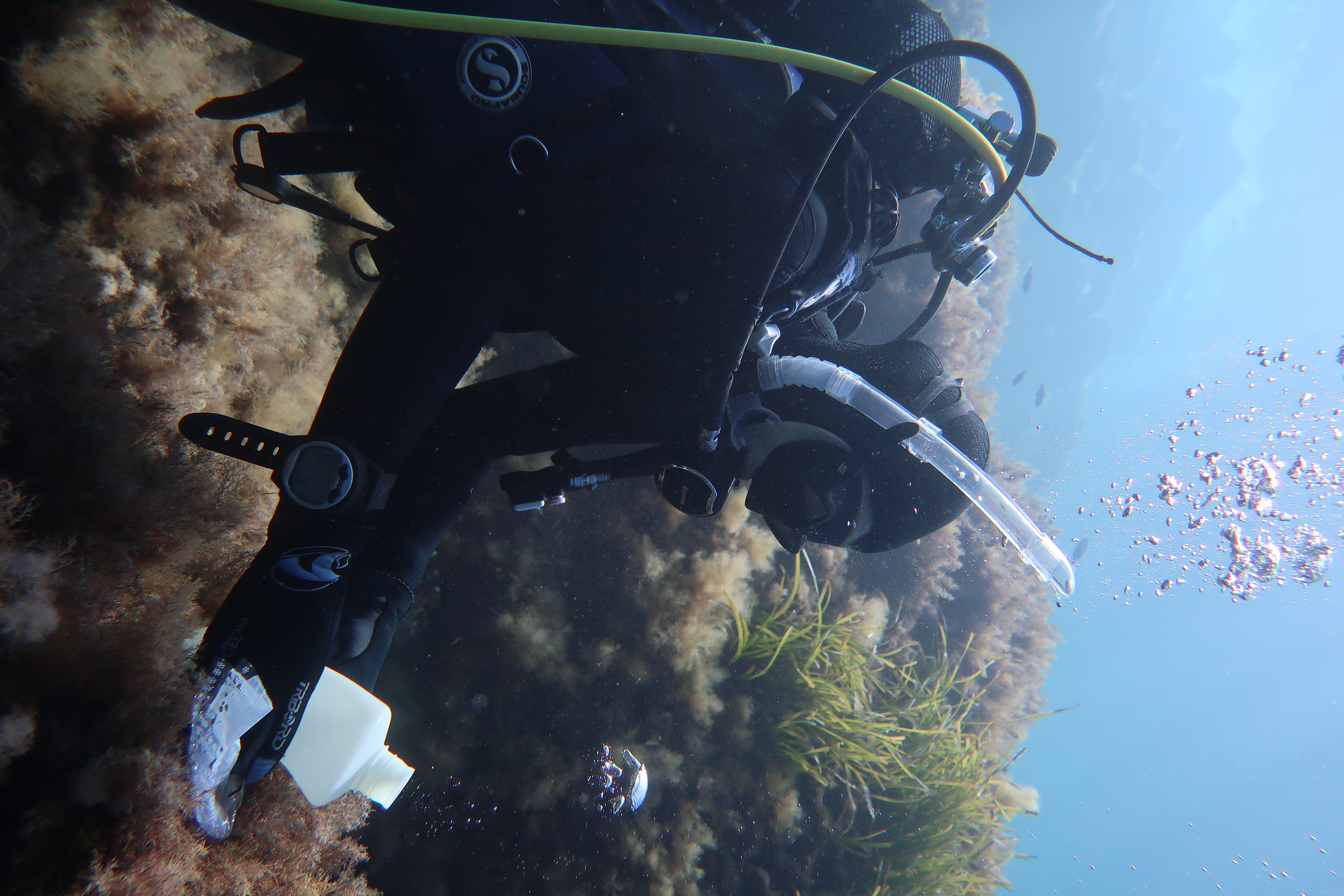
Collection of water samples for eDNA calibration at Capraia Island.
Photo by Caterina Mintrone.
AI-based imaging for species recognition
To accelerate and automate biodiversity monitoring, UNIPI is testing innovative underwater camera systems to collect high-quality images and developing deep learning models for automated analysis. During the summer of 2025, UNIPI temporarily deployed underwater cameras at different sites at Giannutri and Pianosa islands and carried out a pilot test of cable-less cameras for long-term automated monitoring.
In parallel, UNIPI is developing a deep learning–based model to support the automated assessment of macroalgal and seagrass canopy cover and composition from images, including photo-quadrats and videos. This approach will enable the quantification of species-specific spatial distribution and coverage, providing valuable metrics for monitoring changes over time.
The integration of advanced imaging and AI analysis has the potential to greatly enhance the scalability, frequency, and objectivity of coastal habitat monitoring, providing cost-effective tools to detect early ecological shifts and support conservation strategies across the Tuscan Archipelago and similar Mediterranean ecosystems.
Canopy-thinning experiment in Pianosa
The UNIPI team is running a canopy-thinning experiment to identify ecological thresholds and design early-warning indicators of habitat collapse in subtidal macroalgal forests. The experimental platform was established at the interface of forest and adjacent degraded habitats dominated by algal turfs at Pianosa Island in July 2025, with field sampling planned for summer 2026. This work will quantify resilience of macroalgal forests and generate simple, operational tools that enable managers and decision-makers to detect emerging degradation in time to intervene.
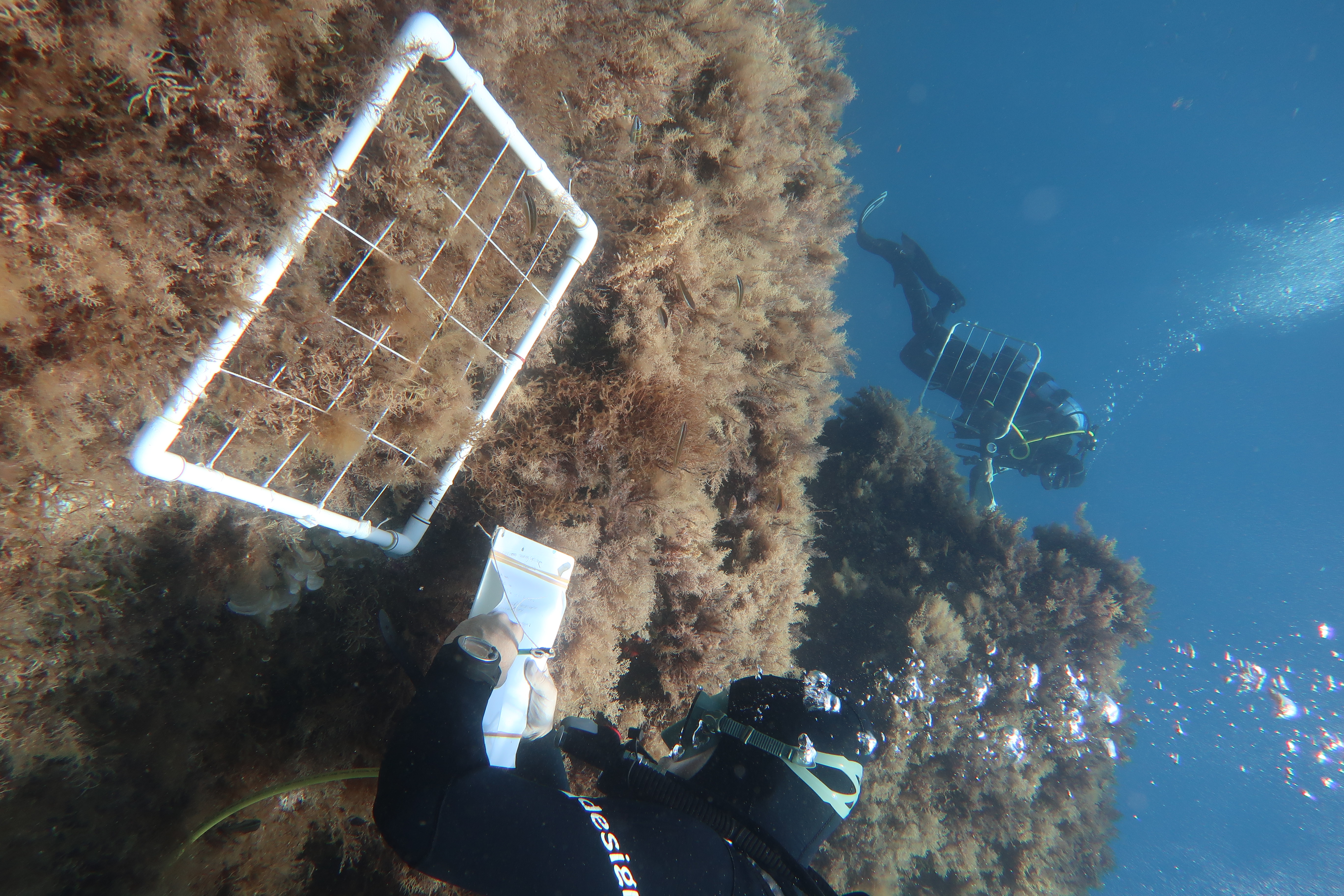
Visual sampling of canopy cover and composition.
Researchers record macroalgal cover using a 50 × 50 cm gridded PVC quadrat.
Photo by Caterina Mintrone.
Characterisation of Thermal Mosaics in Subtidal Macroalgal Forests
The UNIPI team is characterising small-scale thermal mosaics in subtidal macroalgal forests across the Tuscan Archipelago. Our set-up combines 3D frames with high-resolution temperature sensors (to resolve fine spatial and temporal variation) and a long-term network of temperature loggers. This work contributes to the identification of thermal refugia – microhabitats that remain cooler (or occasionally warmer) than surrounding waters – and improves understanding of how forest-associated biodiversity copes with rising temperatures, thereby strengthening predictions of these habitats’ responses to climate change.
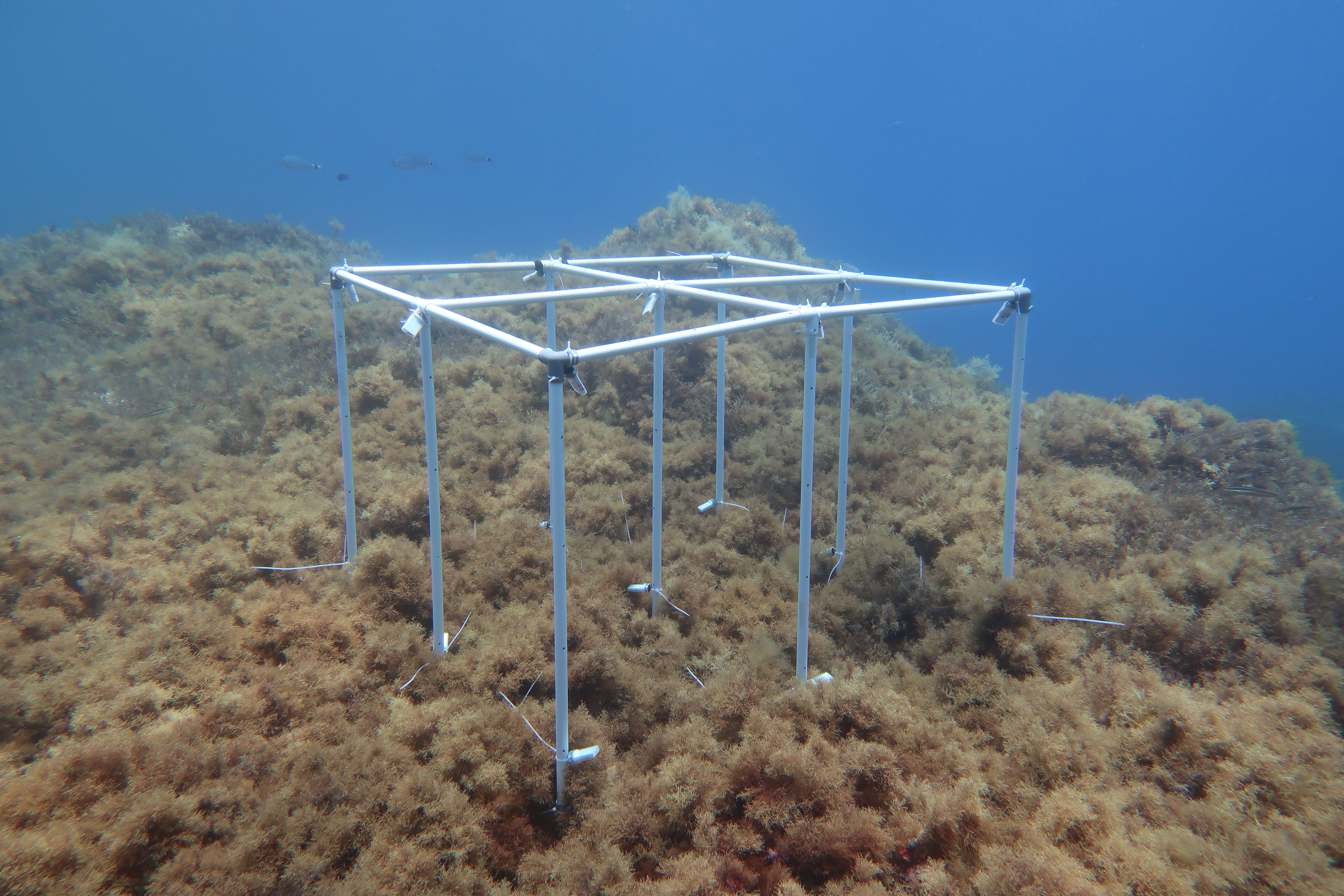
PVC frame equipped with thermometers for monitoring within the water column, at the margin of the macroalgal fronds, and beneath the canopy. Photo by Lisandro Benedetti-Cecchi.
Assessment of Posidonia oceanica meadow metabolism and carbon budget
In July 2025, UNIPI conducted in situ incubations at Giannutri and Pianosa to estimate the metabolism and carbon budget of Posidonia oceanica meadows. Oxygen and carbon fluxes were quantified through light and dark incubations to derive community productivity and respiration. Incubation chambers consisted of a cylindrical PVC base connected to a gas-impermeable polyethylene bag.
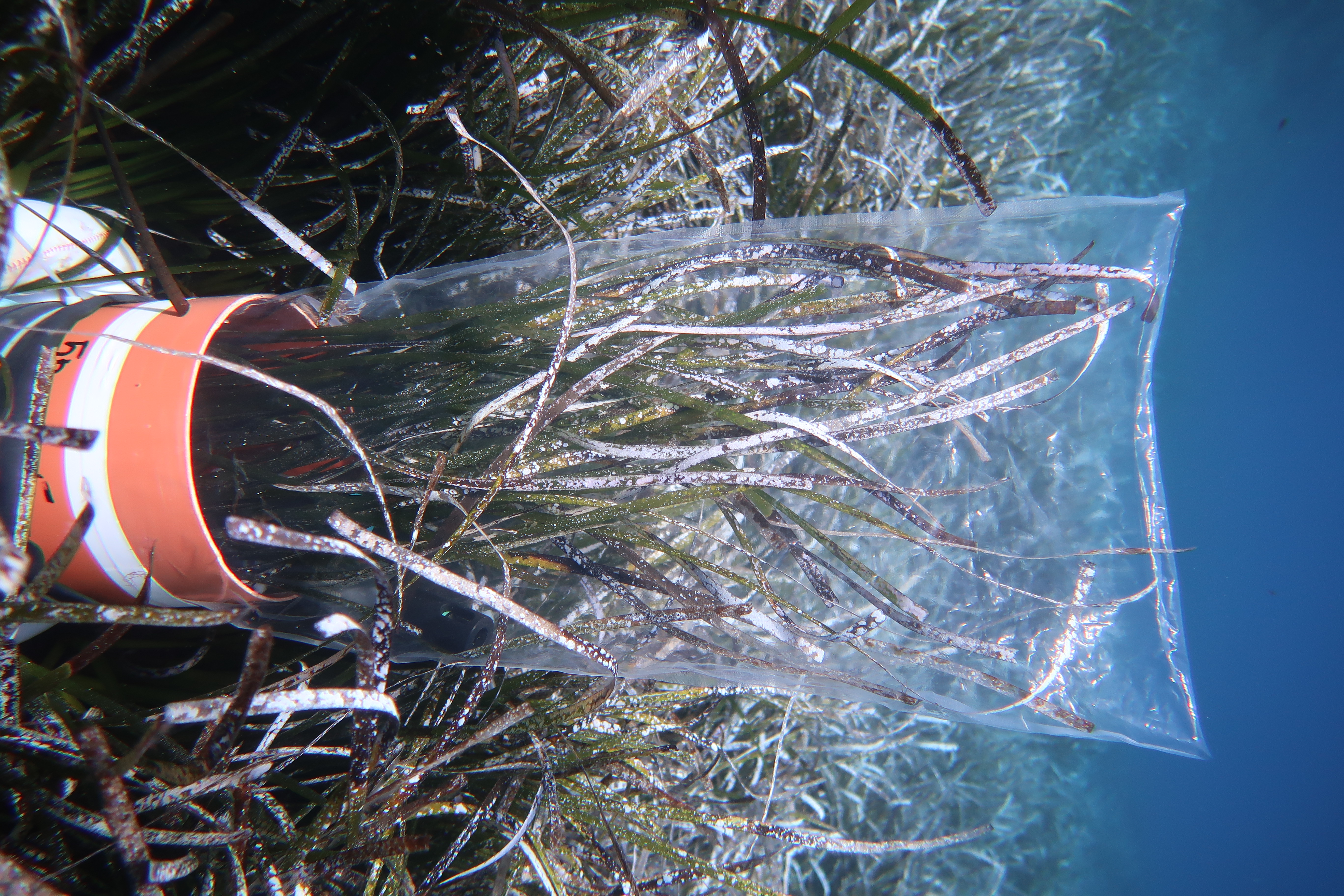
Benthic chamber consisting of a PVC base and a transparent plastic bag
used for the assessment of Posidonia oceanica meadow metabolism.
Photo by Caterina Mintrone.


